March 13 Windstorm Ashland & Richland County | Roof Wind Damage Guide
March 13 Windstorm Hits Ashland & Richland County: How to Check Your Roof for Wind Damage
The Short Answer: On Friday, March 13, 2026, the National Weather Service issued a high wind warning for Ashland and Richland County with sustained winds of 25-35 mph and gusts reaching 60-70 mph. Thousands of homes lost power, trees came down, and many roofs in our area sustained damage — some of it not visible from the street. Here's exactly what to look for and what to do next.
What Happened on March 13
If you live anywhere in Ashland or Richland County, you felt it. Friday's windstorm brought some of the strongest gusts we've seen in years — sustained southwest winds between 25 and 35 mph, with gusts clocking in at 60 to 70 mph across the region.
To put that in perspective, an EF0 tornado produces wind gusts between 65 and 85 mph. We were right at the edge of that range.
The damage was widespread. Power went out for thousands of homes across both counties. Trees came down on roads, power lines, and properties. And while downed trees grab attention, it's the damage you can't see that often causes the biggest problems for homeowners down the road.
How to Check Your Roof for Wind Damage (From the Ground)
Safety First: Do not climb onto your roof after a windstorm. Damaged shingles and debris can create unstable footing, and there may be downed power lines nearby. Always inspect from the ground or call a professional.
Wind Damage Inspection Checklist
Missing or lifted shingles— Walk around your home and look up at the roof from all angles. Missing shingles are obvious, but also look for shingles that appear raised, curled, or sitting at a different angle than the rest.
Shingle granules in your gutters— Check your gutters and downspout discharge areas. A heavy deposit of granules (they look like coarse sand) means shingles have been compromised.
Dented or bent ridge cap, vents, or flashing— Metal components on your roof are vulnerable to high winds. Look for anything that appears bent, dented, or shifted out of position.
Tree branches on or near your roof— Even small branches can puncture shingles or dislodge flashing on impact. If a branch landed on your roof and bounced off, it may have left damage behind.
Water spots on your ceiling or in the attic— Check your attic and upper-floor ceilings for any new water stains or dampness. This indicates the roof's waterproofing has been compromised.
Debris accumulation in roof valleys— Leaves, branches, and other debris trapped in valleys can trap moisture and accelerate damage.
The Hidden Danger: Wind Damage You Can't See
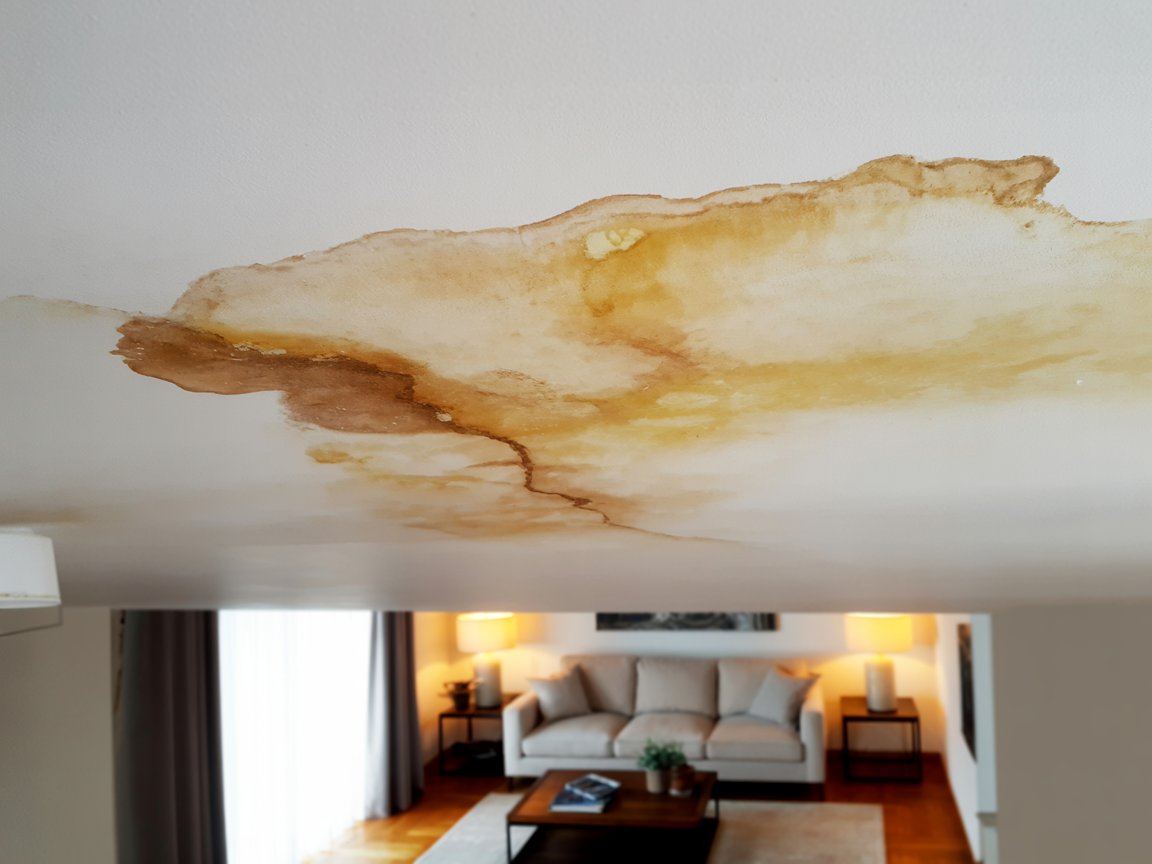
Here's what most homeowners don't realize: wind doesn't have to rip shingles off to cause real damage.
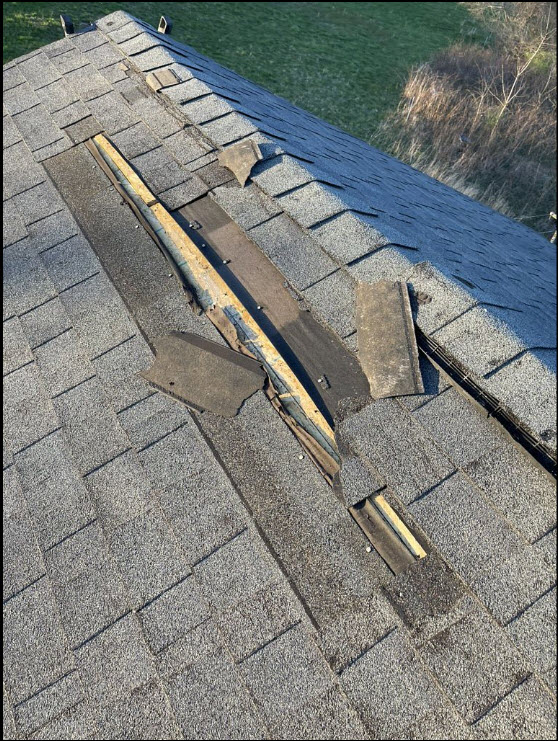
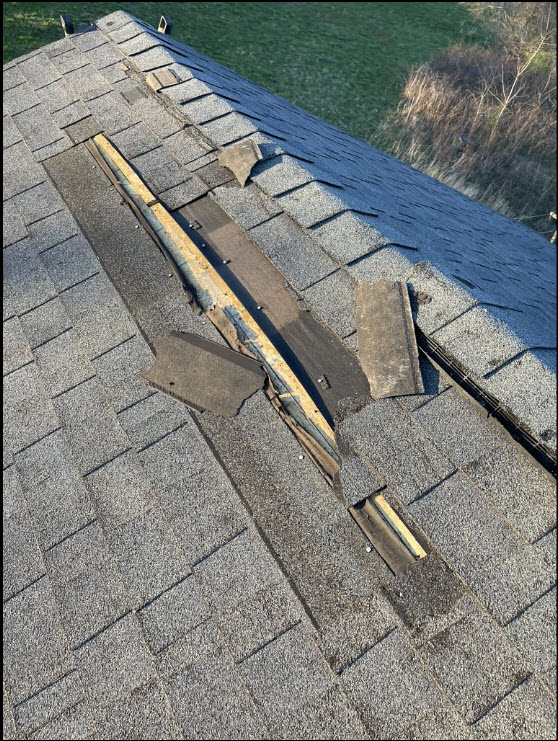
At 60-70 mph, wind gusts can break the adhesive seal that bonds each shingle to the one below it. Once that seal is broken, the shingle can lift with every future wind event — even moderate ones. Water gets underneath. Over weeks and months, that moisture works its way into your decking and eventually into your home.
Cracked flashing around chimneys, vents, and pipe boots is another common result of high wind events. These cracks are nearly impossible to spot from the ground, but they create direct pathways for water to enter your roof system.
This is why we always recommend a professional inspection after a significant wind event — not to sell you something, but because the damage that's hardest to see is the damage that costs the most to fix later.
What to Do If You Find Damage
Step 1: Document Everything
Take photos from the ground of any visible damage. Include wide shots of your home showing the overall condition and close-ups of specific problem areas. Date-stamped photos from your phone are perfect for insurance documentation.
Step 2: Call for a Professional Inspection
A trained roofer can safely get on your roof and identify damage that isn't visible from the ground. At Weikles Roofing, we provide free storm damage inspections and give you an honest assessment — if your roof is fine, we'll tell you. If it needs work, we'll document everything and help you understand your options.
Step 3: Contact Your Insurance Company
Most Ohio homeowner policies cover wind damage. You should report the damage within 24-48 hours for best results, though most policies give you 30-60 days. Having a professional inspection report in hand before you call makes the process smoother.
Step 4: Be Cautious of Storm Chasers
After every major weather event, out-of-town contractors flood the area looking for quick work. They knock on doors, offer "free" inspections, and pressure homeowners into signing contracts on the spot. Many of these companies use subcontractors, offer limited warranties, and won't be around if something goes wrong six months from now.
Before signing anything, verify that your contractor is local, licensed, insured, and has a track record in the community. Ask about their crew — are they in-house employees or subcontractors? Ask about their warranty — is it in writing, and will they be here to honor it?
Free Storm Damage Inspection
Weikles Roofing is offering free inspections for homeowners affected by the March 13 windstorm. Third-generation, family-owned. In-house crews only. Lifetime workmanship warranty on every job.
Why Wind Damage Should Be Addressed Quickly
The temptation after a storm is to wait and see. If nothing is leaking right now, it's easy to assume everything is fine. But wind damage is progressive — a compromised seal or small crack gets worse with each rain and each subsequent wind event.
Ohio's spring weather is unpredictable. Another storm system is already expected early next week, and we haven't even hit the peak severe weather season yet. Addressing damage now, while it's fresh and well-documented, is both easier to repair and easier to get covered by insurance.
About Weikles Roofing
We're a third-generation, family-owned roofing company based right here in Perrysville, Ohio. We serve homeowners throughout Ashland and Richland County, including Mansfield, Shelby, Ontario, Lexington, Loudonville, and the surrounding communities.
Every job is completed by our in-house trained crews — we never use subcontractors. Every roof we install comes with a lifetime workmanship warranty. And we use an Equipter RB4000 to keep your property clean during the job.
We've been through plenty of Ohio storms. If you have questions about your roof after Friday's wind event, give us a call. Honest answers, no pressure.
Frequently Asked Questions: March 13 Windstorm
How do I check my roof for wind damage after the March 13 windstorm?
Stay on the ground and look for missing or lifted shingles, granules collecting in your gutters, dented ridge caps or vents, tree branches on or near the roof, and any new water spots on your ceiling. Do not climb onto your roof after a storm. If you see anything concerning, call (419) 989-6776 for a free storm damage inspection.
Can 60 mph winds damage my roof even if nothing looks wrong from the street?
Absolutely. Wind gusts of 60-70 mph can break the adhesive seal that bonds shingles together without actually tearing them off. This hidden damage allows water to work its way underneath over time. Cracked flashing and compromised underlayment are also common after high wind events and aren't visible from the ground. A professional inspection is the only way to know for sure.
Should I file an insurance claim for wind damage to my roof?
If a professional inspection confirms wind damage, filing a claim is usually worthwhile. Most Ohio homeowner policies cover wind damage as an "Act of God" event, which is typically treated differently than claims for preventable damage. Document everything with photos, get a professional inspection report, and contact your insurance company within 24-48 hours. We can help document damage and meet with your adjuster on-site if needed.
Who does emergency roof repair in Ashland County after storms?
Weikles Roofing provides 24/7 emergency roof repair service throughout Ashland and Richland County. We respond quickly with our own in-house crews — no subcontractors. We're based in Perrysville and have been serving this community for three generations. Call (419) 989-6776 for immediate help.
How do I avoid storm chasers after a weather event?
Be cautious of any contractor who knocks on your door unsolicited after a storm, especially if they pressure you to sign a contract immediately or claim they can "deal with your insurance company" for you. Always verify that your roofer is local, has been in the community for years, uses their own crews (not subcontractors), and offers a written warranty. Ask for references from recent local jobs.
Questions About Your Roof After Friday's Storm?
Free inspections. Honest answers. No pressure. That's the Weikles Roofing way.
Or visit weiklesroofing.com for a free estimate

